Skip to content
OFF AIR
Next broadcast Fri 31 Jul · 19:30 UTC · 5970 kHz

Radio Delta AM

R&S SK080 Refurbished

Rohde and Schwarz SK080 AM broadcast transmitter refurbished by Radio Delta AM
Vintage AM transmitter restoration

R&S SK080 refurbished

A 1959 Rohde & Schwarz AM broadcast transmitter, fully tube-based, restored by Radio Delta AM and used on shortwave around 6040 kHz with Orban 9200 audio processing and LP-700 monitoring.

From heavy broadcast iron to a real shortwave signal.

The Rohde & Schwarz SK080 is not a modern plug-and-play transmitter. It is a classic AM broadcast transmitter from the late 1950s: large, heavy, analogue and completely built around vacuum tube technology. For Radio Delta AM, this made the transmitter more than a piece of equipment. It became a restoration project, a technical learning platform and eventually a real on-air shortwave transmitter.

We used this transmitter on 6040 kHz, combined with an Orban 9200 audio processor and monitored with an LP-700 station monitor. The result was a clean, strong AM signal with a warm but controlled audio character — exactly the type of sound that fits classic shortwave broadcasting.

Technical profile

The SK080 was designed as a professional AM broadcast transmitter, not as amateur radio equipment. That difference can be felt in the mechanical construction, RF layout, modulation system and serviceability.

Manufacturer

Rohde & Schwarz

Rohde & Schwarz is a German manufacturer known for professional RF, broadcast, measurement and communications equipment. The SK080 comes from an era when broadcast transmitters were built for continuous service and long-term maintainability.

Year

Built in 1959

This transmitter represents the valve era of AM broadcasting. It was built before digital control, switching power supplies and software processing became normal parts of the broadcast chain.

Output

Approx. 800 watts RF

The SK080 can deliver around 800 watts of RF carrier power. At this level, cooling, modulation headroom, matching and monitoring become essential.

Power input

Approx. 3.4 kVA

This is a serious high-voltage transmitter. It draws substantial mains power and must be operated with respect for safety, ventilation and correct loading.

Modulation

Anode / screen modulation

The transmitter uses classic high-level AM modulation, where the RF amplifier is modulated by varying the supply conditions of the power stage.

Modulator

2 × QB3/300 tubes

The internal modulator section uses two QB3/300 tubes. These valves are part of the high-power audio section that gives the transmitter its amplitude-modulated character.

How this transmitter makes an AM signal

AM looks simple on a receiver display, but inside a transmitter like the SK080 several systems must work together.

1

Carrier generation

The transmitter first produces a stable RF carrier. On 6040 kHz, that carrier is the centre of the signal that listeners tune in.

2

RF amplification

The carrier is amplified through the RF stages until it reaches useful broadcast power. Correct tuning and loading are critical here.

3

Audio modulation

The programme audio is applied to the RF power stage through the high-level modulator. This creates the amplitude variations that carry the music and speech.

4

Antenna transfer

The final RF output must be correctly matched to the antenna system. A good transmitter still needs a good load to become a useful signal.

Almost a year of restoration work

Bringing the SK080 back into reliable operating condition was not a quick repair. Radio Delta AM spent almost a year getting the transmitter into a state where it could safely and consistently be used on air. With equipment of this age, the work is not only about replacing faulty parts. It is about understanding the original design, checking the high-voltage sections, verifying the RF path, cleaning contacts, checking meters, inspecting wiring and making sure the transmitter behaves predictably under load.

A vintage AM transmitter can look impressive from the outside, but the real work is inside. The high-voltage power supply, RF compartments, modulation transformer path, tube sockets, cooling, switching, tuning components and safety interlocks all need attention. One weak connection or unstable component can affect modulation, carrier stability or even safety.

The goal was not to modernise the SK080 into something it was never meant to be. The goal was to restore it as a real broadcast transmitter: stable, clean, technically honest and suitable for controlled shortwave experiments.

6040 kHz with Orban 9200 audio processing

On 6040 kHz, the SK080 was used together with an Orban 9200. This combination worked very well. The transmitter provided the classic high-level AM platform, while the Orban helped shape the audio before it reached the modulator.

For shortwave AM, audio processing is not just about being loud. It is about keeping music and speech intelligible through fading, noise, narrow receiver bandwidths and changing propagation. The Orban 9200 helped control dynamics, maintain density and protect the transmitter from excessive modulation peaks.

  • Good density: music remains present without disappearing in fading.
  • Controlled peaks: modulation stays cleaner and easier to monitor.
  • Better intelligibility: speech and station IDs remain readable in real shortwave conditions.
  • Classic AM sound: warm, powerful and recognisably Radio Delta.

Monitoring with the LP-700 station monitor

During the tests, the LP-700 station monitor played an important role. A transmitter of this type must not only sound good on a receiver; it must also be watched technically. Carrier level, positive and negative modulation, RF behaviour and audio density all tell part of the story.

The station monitor makes it possible to see what is happening while listening to the signal. That is important because shortwave reception can sometimes hide transmitter problems. A remote receiver may sound poor because of fading or noise, but the station monitor shows whether the transmitted signal itself is clean.

This combination — transmitter meters, LP-700 monitoring, local receiver checks, KiwiSDR recordings and listener reports — is how Radio Delta AM separates real transmitter behaviour from propagation effects.

Inside the SK080 restoration

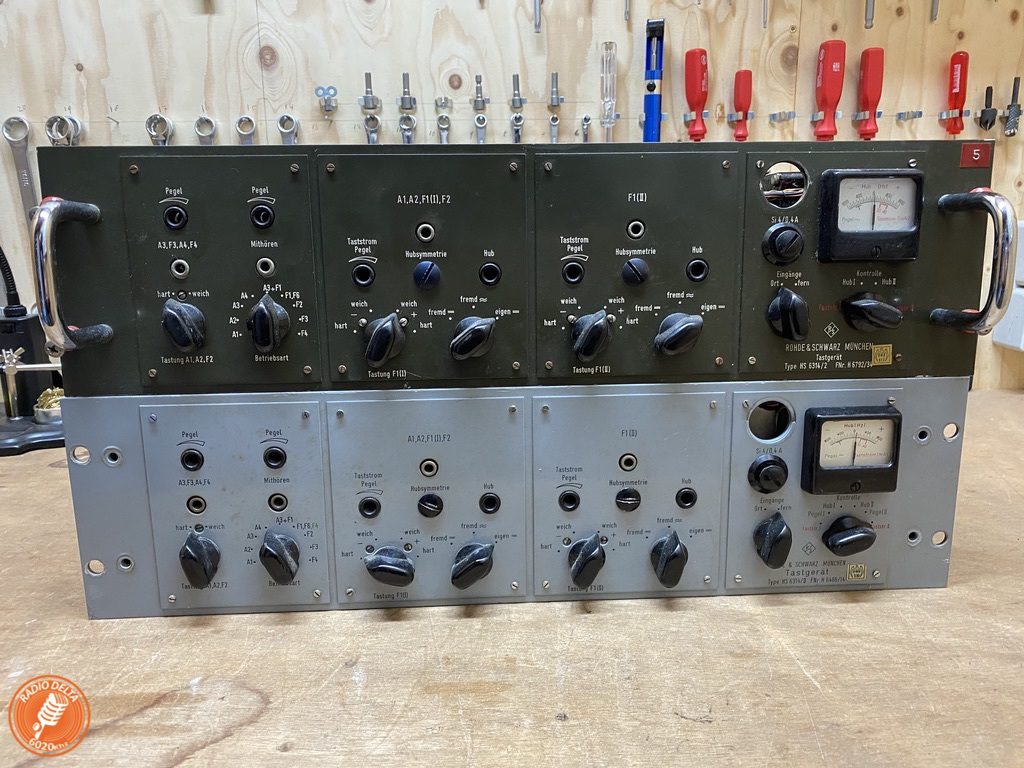
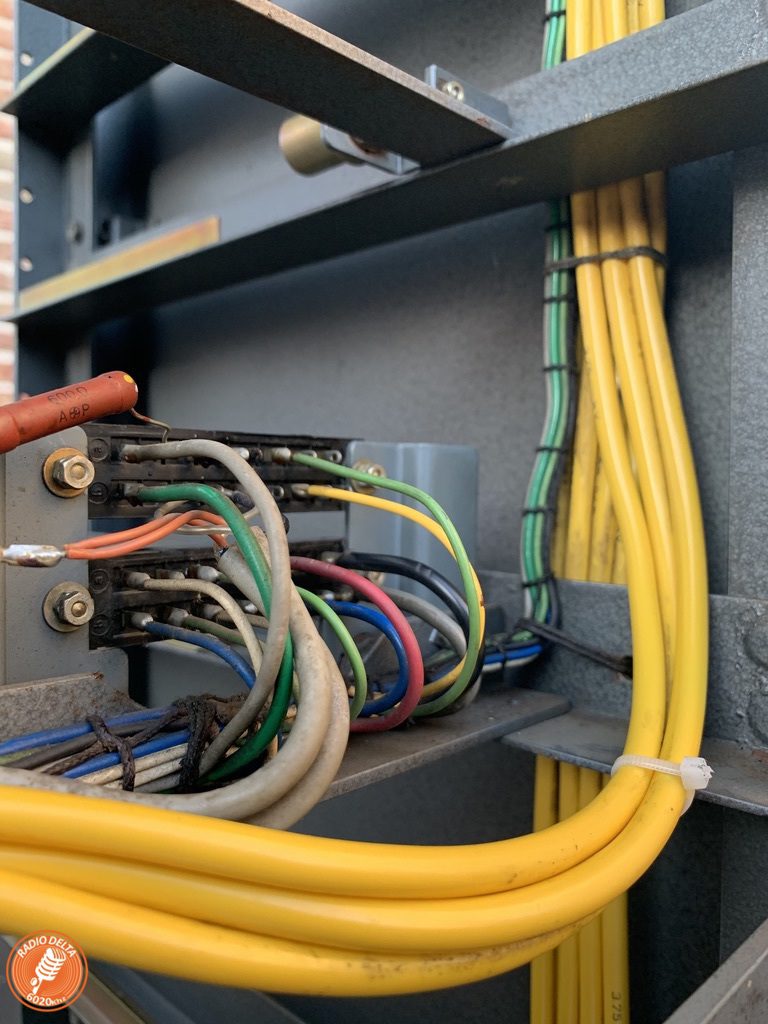
A selection of images from the restoration and test period. The photos show the scale of the transmitter, the internal RF construction and the mechanical quality of this broadcast-era equipment.

How you can use a transmitter like this

A transmitter like the SK080 is not a casual hobby transmitter. It is high-voltage broadcast equipment and should only be operated by people who understand RF safety, mains power, high voltage, antenna matching and AM modulation. But as a learning platform, it is extremely valuable.

  • Start with documentation: understand the RF path, power supply, modulator and protection circuits before applying power.
  • Restore in stages: never assume that old capacitors, switches, contacts or tube sockets are safe.
  • Use a proper dummy load: test RF output and modulation before connecting an antenna.
  • Monitor everything: carrier, modulation peaks, temperature, current and audio level must all be watched.
  • Do not overdrive: clean AM usually sounds better than maximum modulation pushed too far.
  • Compare on real receivers: a transmitter can measure well and still sound different after propagation.

For Radio Delta AM, the SK080 was valuable because it connected old broadcast engineering to real shortwave practice. It helped us understand not only how to generate an AM signal, but how to make that signal listenable, stable and recognisable over distance.

Videos: restoration, explanation and on-air tests

These videos document parts of the restoration, explanation and test period, including 6020 / 6040 kHz operation and LP-700 monitoring.

SK080 restoration and first checks

Part of the process of bringing the transmitter back into usable technical condition.

Working through the transmitter

More practical work around the transmitter and its broadcast chain.

Technical test and operation

On-air preparation and practical testing of the restored transmitter setup.

Explanation video

A closer look at the transmitter and what makes this type of AM broadcast equipment special.

Test on 6020 kHz

A practical shortwave test showing how the transmitter behaved on the 49 metre band.

LP-700 station monitor test

Monitoring the AM signal with the LP-700 while checking modulation, RF behaviour and on-air quality.

What this transmitter taught us

The SK080 project showed that old broadcast technology is still extremely useful when treated with care and respect. It also showed that great AM audio is not the result of one single device. It is the result of the full chain: transmitter condition, modulation system, audio processing, monitoring, antenna matching and real reception reports.

On 6040 kHz, the combination of the restored SK080, the Orban 9200 and careful monitoring produced a very strong Radio Delta sound. Not only loud, but controlled, stable and recognisable. That is the real lesson: classic radio engineering still works when the whole chain is understood.

Help us test the signal. Send a reception report with frequency, UTC time, SINPO, receiver, antenna and location. Your report helps us compare real-world propagation and improve future broadcasts.

Send a reception report

Radio Delta AM

Silvestro – Italy

Shortwave listener in Treviso, Italy, monitoring Radio Delta AM on 12005 kHz at a home listening station
“Today I discovered a very good shortwave station with an excellent approach to shortwave listeners.”
— Silvestro, Italy

A shortwave discovery

This listener story shortwave report highlights how Radio Delta AM is received across Europe.

Listening from Treviso

This listener story comes from Treviso, in the Venice area of northern Italy. On 25 January 2026, Silvestro tuned in to Radio Delta AM and contacted us for the first time.

He listened to the music programme on 12.005 kHz and responded to our on-air invitation to send reception reports via the Radio Delta AM website.

The listening setup

Silvestro used an ICOM IC-R8600 with a 24-metre longwire antenna. He reported a SINPO of 55444 and described the signal as very good.

First report and eQSL

As a radio enthusiast, Silvestro enjoys collecting eQSL cards from stations around the world. After hearing the broadcast, he submitted a reception report and asked if he could receive our eQSL verification.

Thank you Silvestro — and welcome to the Radio Delta AM listening community.

Reception overview

  • Frequency: 12.005 kHz
  • Date: 25 January 2026
  • Time (UTC): 08:50
  • Listener location: Treviso, Venice Area, Italy
  • Distance to Elburg: approximately 950 km
  • Receiver: ICOM IC-R8600
  • Antenna: Longwire, 24 m
  • SINPO: 55444
  • Remarks: Very good signal

Radio Delta AM

A New Radio Delta AM Master Hour

At Radio Delta AM, we believe that shortwave radio works best when it has rhythm, recognition, and a strong connection with its listeners. Over the past months, we’ve carefully reviewed how our programmes flow, how listeners tune in, and how reception conditions affect the listening experience.

Based on that, we’re happy to announce that Radio Delta AM will soon start broadcasting with a new Master Hour format, also known as the MU.


What Is the Master Hour?

The Master Hour is the backbone of every Radio Delta AM broadcast. It defines how each hour is structured, from the first station identification to the last listener voice before the next hour begins.

With the new MU format, every hour follows a clear and recognisable structure. This makes it easier for listeners — especially shortwave and DX listeners — to know what to expect, even when tuning in halfway through an hour or listening under changing propagation conditions.


What Can Listeners Expect?

Each Master Hour begins with a clear station opening, followed by Radio Delta News at the top of the hour. This news block includes:

•current frequencies in use

•shortwave and propagation information

•listener reception reports from around the world

Music remains at the heart of Radio Delta AM. The MU format is built around long, uninterrupted music blocks featuring Five Decades of Music, combined with special items such as The Record and Its Story and Radio Stories.

A fixed part of every hour is Pure Dutch — one Dutch pop classic and one true pirate record. This segment highlights Dutch radio culture and gives Radio Delta AM a sound you won’t hear anywhere else on shortwave.

Listener voices are an essential element of the MU. Reception reports sent in via our website regularly return on the air, making listeners part of the programme itself.


Sometimes the MU Goes Full DX

While the Master Hour has a fixed structure, it is also flexible. On certain days or during special conditions, Radio Delta AM deliberately shifts the focus of the MU towards DX listening.


During these DX-oriented hours, you may hear:

•more detailed propagation and band information

•extra station identification for easier logging

•additional listener reception reports with technical details

•a slightly calmer pace, optimised for long-distance reception

This means the MU remains recognisable, but adapts to the moment — whether we’re focusing on music flow or reaching as far as possible on shortwave.


Recognition Every Hour

One of the key ideas behind the Master Hour is recognition. Every hour starts and ends with the same clear identity: Radio Delta AM, its music, its stories, and its listeners.

This consistency helps shortwave listeners identify the station quickly, supports accurate logging and QSL requests, and creates a calm and enjoyable listening experience.


Reception Reports and eQSL

Listeners who would like to receive a Radio Delta AM eQSL are invited to send their reception reports via our website at radiodelta.am, under the tab


Reception Reports

Reports that include date, UTC time, frequency, reception quality, and a short personal remark are especially appreciated and may be featured in future broadcasts.


When Will the New MU Start?

The new Master Hour format will be introduced very soon and will gradually become the standard structure for all Radio Delta AM broadcasts.

We’ll keep you informed via our website and on the air as the rollout begins.


Long Live Shortwave Radio

With the new Master Hour format, Radio Delta AM continues to build a listening experience that is recognisable, flexible, and community-driven — sometimes music-focused, sometimes DX-focused, but always true to shortwave radio.

Radio Delta AM

Brian – Denmark

“It’s not just radio – it’s real radio.”
— Brian, Denmark

A real shortwave moment

Brian at the receiver

This shortwave radio story began in Denmark — at a listening desk, with a receiver, an antenna, and someone who still listens.

Brian, callsign OZ4EA, tuned in from his home station in Denmark. On 12.005 kHz and 6.040 kHz, he listened to Radio Delta AM, made recordings and shared photos of his setup — not just to report reception, but to share the experience.

When radio feels alive

Brian described it in one simple sentence: “It’s not just radio – it’s real radio.”

Signals fading in and out. Audio breaking through the noise. Moments when everything lines up and the radio comes alive. That’s the magic.

The listening setup

At the heart of Brian’s station is a Xiegu G90, connected to an EFHW 40-meter horizontal antenna.

A clean, practical setup. No automation. Just a receiver, an antenna and time spent listening — exactly how shortwave is meant to be experienced.

One question from the shack

Brian noticed something many listeners did at the same time: why were we sometimes only on one frequency?

Winter over Elburg

During the first days of January, winter hit Elburg hard. Snow, ice and strong winds affected antennas, feeders and transmitters.

For safety reasons, we sometimes limited transmissions to a single frequency — or paused completely. Protecting equipment means protecting future broadcasts.

Why it matters

What stayed with us most was Brian’s trust: “A true feel-good radio experience, that I can rely on.”

That is exactly what Radio Delta AM aims to be. Not perfect. Not automated. But present. Human. Alive.

Radio Delta AM

Happy 2026 – best wishes from Radio Delta AM

Happy 2026!

From all of us at Radio Delta AM, we wish all our listeners a very good, healthy, and enjoyable new year, filled with music, radio moments, and lots of listening pleasure.

We’re proud to start 2026 the way we love most: together with shortwave listeners from all around the world. On January 1st, Radio Delta AM is live on the air, continuing our tradition of real shortwave radio made by enthusiasts, for enthusiasts.

On the air on two shortwave frequencies

To begin the new year, Radio Delta AM can be heard on 6.040 kHz, and also on 12.005 kHz, offering extended coverage for longer-distance reception. Depending on propagation, listeners can choose the frequency that works best for their location.

Listener reactions from around the world

Over the past days, we’ve received many warm and encouraging messages from our listeners, reminding us why shortwave radio is still so special.

Tonny (Netherlands) wrote:

“Very good signal here, enjoyable audio, and great to spend time listening.”

Andrew (England) reported:

“Clear signal with some propagation, but very listenable. A pleasure to hear.”

Jakub (Czech Republic) said:

“Good reception and professional presentation. I really enjoy listening.”

Timo (Finland) shared:

“Even under difficult conditions, the programme keeps you listening. Real shortwave radio.”

Dennis (Netherlands) mentioned:

“Good audio and stable reception — very pleasant listening.”

Chris (Poland) told us:

“Strong signal with slight fading, but full of atmosphere and great radio stories.”

Dieter (Germany) added:

“Once the band opens, the Delta sound is excellent. Shortwave at its best.”

These reactions are a great motivation for our entire team and show how radio continues to connect people across borders.

Five Decades of Music & Radio Stories

As we move into 2026, Radio Delta AM continues with its trusted format Five Decades of Music, combined with our popular Radio Stories. These stories bring personal radio memories, listener experiences, and moments from the world of shortwave radio.

New Radio Stories are already in preparation and will be added throughout the year, bringing fresh voices, new ideas, and more inspiration from the shortwave community.

Looking ahead to 2026

The new year will bring new ideas, new sounds, and new surprises on shortwave. Together with our listeners, we’ll keep exploring what makes radio special: sound, distance, imagination, and connection.

Thank you to everyone who listens, sends reception reports, shares memories, and supports Radio Delta AM. You are what keeps this station alive.

We wish all our listeners a wonderful 2026 — with good reception, great music, and lots of listening pleasure.

IMG_8693

Radio Delta AM

Shortwave Broadcasts: 31 Dec 2025 & 1 Jan 2026

There’s something timeless about listening to shortwave radio as one year fades out and a new one begins. This year, we’re marking the New Year period with two full days of shortwave broadcasting, and we’d love for you to join us.

We’ll be on the air on both days:

📅 31 December 2025

📅 1 January 2026

🕖 Broadcast time (both days): 07:00–16:00 UTC

📻 Frequencies:

6040 kHz and 12005 kHz

Why shortwave at the turn of the year?

Shortwave radio is about more than just listening — it’s about discovery and connection. You tune across the band, find the signal, hear a bit of fading or noise, and suddenly you’re part of something shared across borders and continents.

Listeners often describe it like this:

“It feels like a real human connection, not just another broadcast.”

“No algorithms, no screens — just radio, pure and simple.”

At the turn of the year, that feeling becomes even more meaningful. While the calendar changes, radio waves quietly travel through the daytime sky, linking listeners around the world.

The unmistakable shortwave experience

Anyone who listens to shortwave knows the sound: “Sometimes there’s noise, sometimes fading — and that’s part of the magic.”

Another listener once said: “The idea that this signal has travelled thousands of kilometres before reaching my radio never gets old.”

Those imperfections make every listening moment unique.

Tune in and listen

Set your receiver, adjust your antenna, and join us on 31 December 2025 and 1 January 2026, between 07:00 and 16:00 UTC, on 6040 kHz or 12005 kHz.

📡 Two days, one shared shortwave experience — we hope to meet you on the air.

Radio Delta AM

Christmas Signals from Elburg 🎄📻

On December 20th, 2025, Radio Delta is on the air on 6.040 kHz. You can tune in daily throughout the Christmas period and right into the New Year.

Yes — it’s Radio Delta all Christmas long, bringing music, memories and that unmistakable shortwave feeling to listeners across Europe and beyond.

Listener Reports from Across the Bands

We recently received a lovely message from the United Kingdom.

Andre wrote to tell us he spent the entire weekend listening to Radio Delta on 6040 kHz.

Messages like this remind us why shortwave radio remains such a special hobby — connecting people through nothing more than signals and passion. We also encourage listeners to visit our website and leave a comment on the blog.

Lewis from Scotland recently wrote: “Hello Radio Delta, hopefully I can receive your broadcasts more, here in Scotland. Best wishes with the new frequencies. Regards, Lewis.”

Coming Up: FRS-Holland Holiday Broadcast – December 21st

On Sunday, December 21st, don’t miss a true shortwave tradition: FRS-Holland’s annual Holiday Season broadcast.

On Sunday, December 21st, don’t miss a true shortwave tradition: FRS-Holland’s annual Holiday Season broadcast.

FRS-Holland will be on air on: 7700 // 9300 kHz, 7405 kHz, 5870 kHz and 12005 kHz via the Radio Delta transmitter.

🕘 Time: 08:52 – 13:50 UTC (09:52 – 14:50 CET). There is even a possibility of a second run after close-down. All familiar voices will be present — Mike, Dave, Jan, Bert and Peter — with special seasonal December jingles, radio-related features, DX News, the Day Calendar and great music from the past 60 years. A festive shortwave journey to help ring out 2025 in true radio style.

Let Your Voice Be Heard on Shortwave

As a listener, you can actively support shortwave radio. Make a short audio recording and tell fellow listeners why this hobby inspires you.

Send us your MP3, and your voice may be heard worldwide on Radio Delta AM. Shortwave radio lives through its listeners — and your signal matters.

Shortwave isn’t just radio. It’s distance, discovery and connection — all carried by the air.


Radio Delta AM

Dave – United Kingdom

“Thanks for the programmes, presenters and music — always great to hear Radio Delta across the North Sea.”
— Dave, Market Drayton

A signal from Shropshire

Dave at the receiver

This shortwave radio story arrived from Market Drayton, Shropshire — about 40 miles south of Liverpool. Dave tuned in from England and shared both the details and the feeling behind his reception report.

Tuning 5970 kHz

On Sunday, December 7th, 2025, Dave tuned to 5970 kHz and caught Radio Delta coming in from across the North Sea. He was listening on an FTDX101D receiver connected to an end-fed long wire antenna — a classic setup for pulling shortwave signals out of the air.

A solid signal

Dave reported reception at 5-4-4-4-4 — a good, solid signal overall, with occasional drops. Those little dips are part of the shortwave experience, shaped by propagation and natural atmospheric noise. You can even hear it in the recording he shared with us.

Shared the old-fashioned way

Because of limitations on our QSL page, the audio file couldn’t be uploaded directly. So Dave sent the recording by email instead — sometimes radio still finds its own path.

Across the North Sea

Thanks for listening, Dave — and greetings to all our listeners in the UK and beyond, wherever the signal happens to land.

Radio Delta AM

❄️ Winter Magic on the Airwaves — New Frequencies, New Energy! ❄️

The airwaves were a bit wild last weekend! QRM on 5.970 kHz tried to knock us off the dial — but we don’t give up that easily. After fresh testing and some serious radio wizardry, we’re thrilled to announce:

📡 6.040 kHz is our brand-new main frequency for the coming weeks!

And when the skies get noisy, 5.970 kHz stands ready as our trusted backup.

The 25-meter band had its own share of chaos too. With interference crashing in on 12.030 kHz, we’re moving to 12.005 kHz as our new alternative. More options, more stability, more freedom to keep the music playing — no matter what the QRM throws at us.

One change you should know: we’re officially signing off from 9.800 kHz. CRI’s heavy interference left us no room to breathe there.

But now for the fun part…

🎄 This weekend, Elburg turns into a sparkling winter fairytale during “Winter in the Fortress”!

The historic streets fill with lights, music, and festive cheer — the perfect backdrop as we fine-tune our holiday broadcasts and bring shortwave to life with that unmistakable December glow.

So here’s your winter listening plan:

▶️ Tune in daily on 6.040 kHz from 07:00 to 16:00 UTC

Grab a warm drink, twist that dial, and let the sound of winter roll in.

Because this season… shortwave is alive, kicking, and more magical than ever.

Radio Delta AM

Costa – Cyprus

“Costa listening to Radio Delta on shortwave from Limassol, Cyprus, using his DX radio setup”
“Hearing a message dedicated to me here in Cyprus brought me real comfort during a difficult week.”
— Costa, Limassol (Cyprus)

A signal across 2,700 kilometers

This shortwave radio story comes from Limassol, Cyprus — more than 2,700 km from our transmitter in Elburg. Sometimes a radio story begins far from the transmitter — and this one truly does. From Elburg to Limassol is roughly 2,700 km as the crow flies, across Europe and the Mediterranean. Yet on the right day, with the right conditions, that distance collapses into a signal you can hear in your shack.

That’s where we meet Costa Constantinides, listening from Limassol, Cyprus — a dedicated DXer whose reception report carries both precision and heart.

A lifetime in the DX world

Costa is 69 and has been involved in DXing since his teenage years. His journey began in Johannesburg, South Africa, in an era when the bands felt quieter and signals often came through with less interference.

Over the decades he confirmed reception from an impressive 136 countries on shortwave and medium wave — the kind of number that only comes from patience, experience, and a genuine love for radio.

The listening setup

Costa’s radio path can be seen in the receivers he uses. He speaks fondly of the legendary Barlow Wadley XCR-30, and today his listening bench features a strong combination: NRD-525, Sangean ATS-909X, and a Tecsun PL-310.

With two loop antennas at his disposal, he’s well equipped to chase signals with clarity — whether it’s a clean carrier, a fading audio peak, or the moment a distant station suddenly locks in.

Hearing Radio Delta on 9.800 kHz

On Sunday, March 9th, 2025, Costa tuned in to Radio Delta International on 9.800 kHz from 16:28 to 18:53 UTC. His report noted the signal improving from SIO 433 to SIO 444 as the programme progressed.

He even logged the opening song at 16:28 UTC“It’s Now or Never” — and followed the show with the kind of attention only true listeners bring: the music, the announcer, and the small details that make a broadcast feel alive.

A personal moment on the air

Then came the moment that turned this into more than a technical reception report: Costa heard a surprise message dedicated to him in Cyprus. It arrived during a difficult week, as his 92-year-old mother was recovering from illness in intensive care.

That’s when radio shows its real power. A signal can carry music — but it can also carry encouragement, connection, and a reminder that someone, somewhere, is thinking of you.

Why 9.800 matters

We share Costa’s story because 9.800 kHz has become a meeting point for our community. A frequency isn’t “just a number” — it becomes a place where listeners gather, compare notes, and feel part of something bigger.

Costa’s reception from Cyprus reminds us why we keep the transmitter on: shortwave still connects people across borders — turning distance into a human story.

“Costa listening to Radio Delta on shortwave from Limassol, Cyprus, using his DX radio setup”