

More than fifty years of Radio Delta
Explore the transmitters, studios, antennas, QSL cards, recordings and listener memories that shaped Radio Delta from its first medium-wave broadcasts in 1975 to the station of today.
The Radio Delta story will continue to grow
Radio Delta started in 1975 on 180 and 227 metres medium wave. International shortwave broadcasts followed in 1979. Original photographs, QSL cards, technical details and surviving recordings now make it possible to preserve that history online.
This is the first version of the Radio Delta Digital Museum. New photographs, recordings, reception reports, documents and personal memories can be added as separate exhibits without rebuilding the complete page.
Radio Delta through the years
Medium-wave beginnings
First broadcasts from Elburg on 180 and 227 metres.
International shortwave
A crystal-controlled valve transmitter brought Radio Delta to European DX listeners.
More power and more post
Shortwave power grew to approximately 600 watts and reception reports arrived in large numbers.
Radio Delta AM
Modern shortwave broadcasting with the same independent spirit.
Equipment, studio and QSL history
These first four exhibits form the beginning of a larger historical collection.

The BC-191 and the 227 metre signal
Radio Delta’s early medium-wave operation used a BC-191 transmitter arrangement with a powerful valve modulator. The modulator used eight VT-4C valves.
An L-antenna worked against an extensive ground system containing more than 1,000 metres of buried radials. With approximately 100 watts, the station was received across Europe.
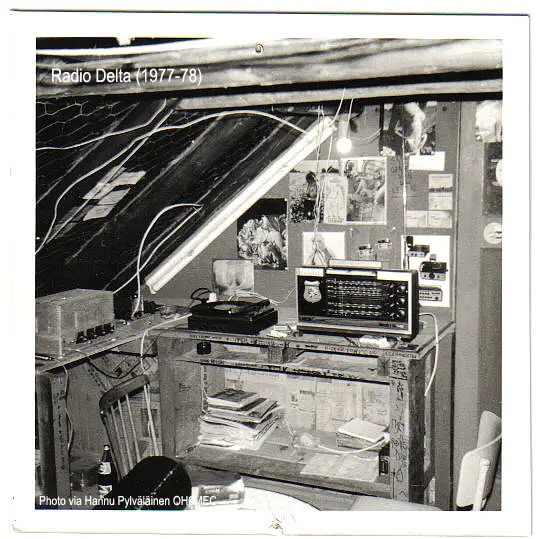
The original studio in Elburg
The first Radio Delta studio contained everything needed to make real radio: turntables, tape machines, microphones, records and homemade connections between studio and transmitter.
It was a modest room, but it became the starting point for broadcasts that travelled far beyond Elburg.
The first international shortwave transmitter
The first crystal-controlled transmitter used an EL84 oscillator, an EL34 buffer and two 807 valves in the final stage. Output was approximately 75 watts.
The final stage used both screen-grid and anode modulation. Geloso amplifiers with two EL503 valves supplied the modulation. The transmitter was later expanded with two 813 valves to approximately 600 watts.

A Radio Delta QSL from 1983
Reception reports arrived through the familiar Radio Delta postbox in Elburg. Mail was collected every week and sometimes more often. On exceptional days, the post amounted to an entire sack.
The surviving cards, letters and reports contain valuable memories of listeners, equipment and reception conditions across Europe. More of this archive can be added later.
The original 227 metre broadcasts
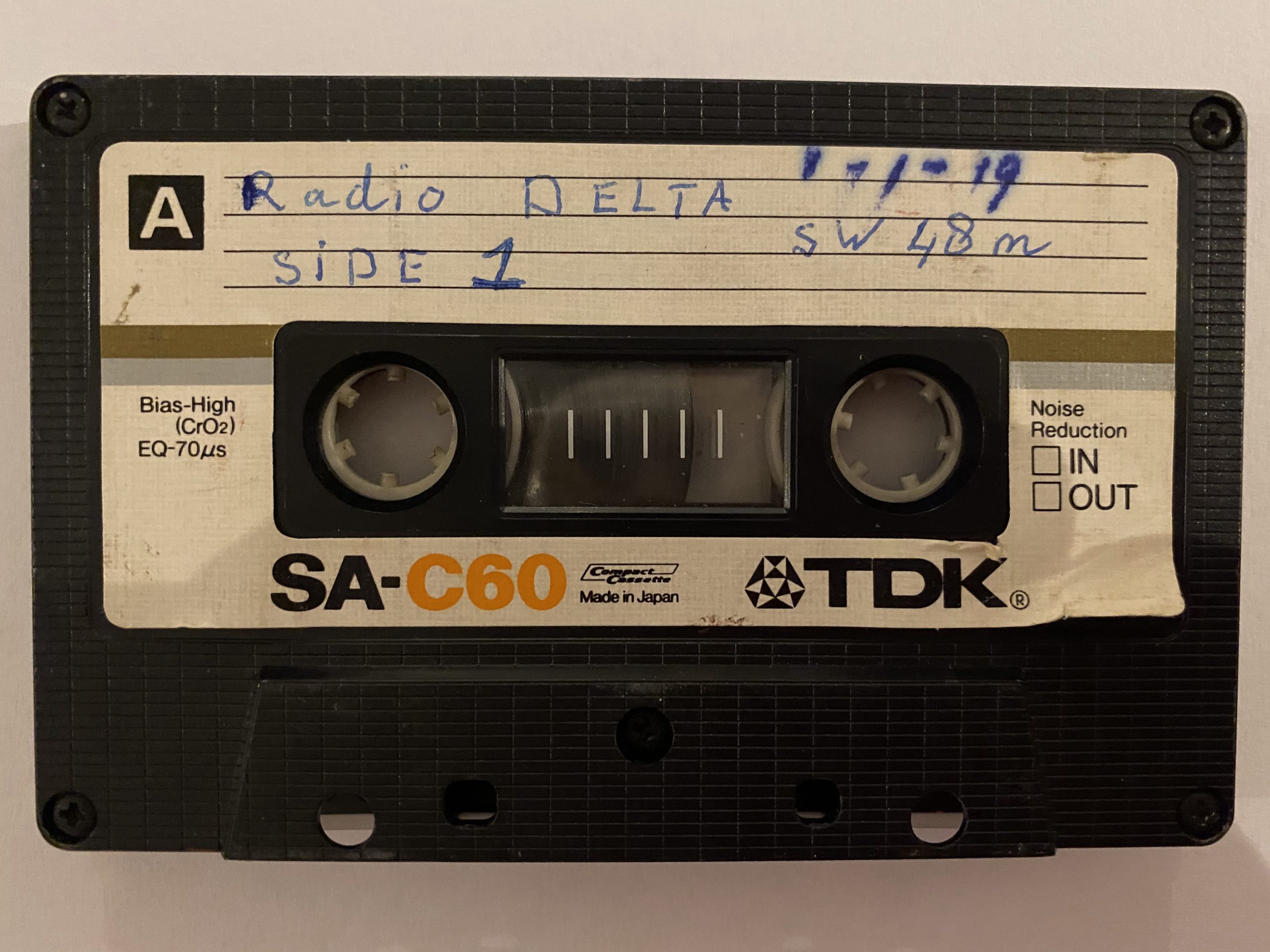
Original recordings from Radio Delta’s early international medium-wave broadcasts still exist. Once the recording has been digitised and uploaded to WordPress, it can be added directly to this museum.
<source src=”URL-TO-RECORDING.mp3″ type=”audio/mpeg”>
Your browser does not support the audio player.
</audio>
When reception reports arrived by the sack
In the years before email and online forms, every reception report arrived on paper. Listeners described the frequency, time, programme details, receiver, antenna and signal strength. Many enclosed return postage or an International Reply Coupon and waited for a Radio Delta QSL.
The amount of mail was sometimes extraordinary. The postbox was checked every week, and occasionally more often. A full sack of reports was physical proof that the signal had crossed borders and found an audience.
What can be added next
Each new photograph or recording can become a separate exhibit while this page remains the central museum entrance.
Audio History Archive
Original medium-wave and shortwave recordings, jingles, station identifications and Radio Delta Goes DX programmes.
QSL and Mail Archive
Historic reception reports, envelopes, QSL cards, postbox memories and remarkable listener correspondence.
Transmitter Museum
Detailed exhibits about the BC-191, 807 and 813 transmitters, VT-4C modulation and later Radio Delta equipment.