

R&S SK080 refurbished
A 1959 Rohde & Schwarz AM broadcast transmitter, fully tube-based, restored by Radio Delta AM and used on shortwave around 6040 kHz with Orban 9200 audio processing and LP-700 monitoring.
The Rohde & Schwarz SK080 is not a modern plug-and-play transmitter. It is a classic AM broadcast transmitter from the late 1950s: large, heavy, analogue and completely built around vacuum tube technology. For Radio Delta AM, this made the transmitter more than a piece of equipment. It became a restoration project, a technical learning platform and eventually a real on-air shortwave transmitter.
We used this transmitter on 6040 kHz, combined with an Orban 9200 audio processor and monitored with an LP-700 station monitor. The result was a clean, strong AM signal with a warm but controlled audio character — exactly the type of sound that fits classic shortwave broadcasting.
Technical profile
The SK080 was designed as a professional AM broadcast transmitter, not as amateur radio equipment. That difference can be felt in the mechanical construction, RF layout, modulation system and serviceability.
Rohde & Schwarz
Rohde & Schwarz is a German manufacturer known for professional RF, broadcast, measurement and communications equipment. The SK080 comes from an era when broadcast transmitters were built for continuous service and long-term maintainability.
Built in 1959
This transmitter represents the valve era of AM broadcasting. It was built before digital control, switching power supplies and software processing became normal parts of the broadcast chain.
Approx. 800 watts RF
The SK080 can deliver around 800 watts of RF carrier power. At this level, cooling, modulation headroom, matching and monitoring become essential.
Approx. 3.4 kVA
This is a serious high-voltage transmitter. It draws substantial mains power and must be operated with respect for safety, ventilation and correct loading.
Anode / screen modulation
The transmitter uses classic high-level AM modulation, where the RF amplifier is modulated by varying the supply conditions of the power stage.
2 × QB3/300 tubes
The internal modulator section uses two QB3/300 tubes. These valves are part of the high-power audio section that gives the transmitter its amplitude-modulated character.
How this transmitter makes an AM signal
AM looks simple on a receiver display, but inside a transmitter like the SK080 several systems must work together.
Carrier generation
The transmitter first produces a stable RF carrier. On 6040 kHz, that carrier is the centre of the signal that listeners tune in.
RF amplification
The carrier is amplified through the RF stages until it reaches useful broadcast power. Correct tuning and loading are critical here.
Audio modulation
The programme audio is applied to the RF power stage through the high-level modulator. This creates the amplitude variations that carry the music and speech.
Antenna transfer
The final RF output must be correctly matched to the antenna system. A good transmitter still needs a good load to become a useful signal.
Almost a year of restoration work
Bringing the SK080 back into reliable operating condition was not a quick repair. Radio Delta AM spent almost a year getting the transmitter into a state where it could safely and consistently be used on air. With equipment of this age, the work is not only about replacing faulty parts. It is about understanding the original design, checking the high-voltage sections, verifying the RF path, cleaning contacts, checking meters, inspecting wiring and making sure the transmitter behaves predictably under load.
A vintage AM transmitter can look impressive from the outside, but the real work is inside. The high-voltage power supply, RF compartments, modulation transformer path, tube sockets, cooling, switching, tuning components and safety interlocks all need attention. One weak connection or unstable component can affect modulation, carrier stability or even safety.
The goal was not to modernise the SK080 into something it was never meant to be. The goal was to restore it as a real broadcast transmitter: stable, clean, technically honest and suitable for controlled shortwave experiments.
6040 kHz with Orban 9200 audio processing
On 6040 kHz, the SK080 was used together with an Orban 9200. This combination worked very well. The transmitter provided the classic high-level AM platform, while the Orban helped shape the audio before it reached the modulator.
For shortwave AM, audio processing is not just about being loud. It is about keeping music and speech intelligible through fading, noise, narrow receiver bandwidths and changing propagation. The Orban 9200 helped control dynamics, maintain density and protect the transmitter from excessive modulation peaks.
- Good density: music remains present without disappearing in fading.
- Controlled peaks: modulation stays cleaner and easier to monitor.
- Better intelligibility: speech and station IDs remain readable in real shortwave conditions.
- Classic AM sound: warm, powerful and recognisably Radio Delta.
Monitoring with the LP-700 station monitor
During the tests, the LP-700 station monitor played an important role. A transmitter of this type must not only sound good on a receiver; it must also be watched technically. Carrier level, positive and negative modulation, RF behaviour and audio density all tell part of the story.
The station monitor makes it possible to see what is happening while listening to the signal. That is important because shortwave reception can sometimes hide transmitter problems. A remote receiver may sound poor because of fading or noise, but the station monitor shows whether the transmitted signal itself is clean.
This combination — transmitter meters, LP-700 monitoring, local receiver checks, KiwiSDR recordings and listener reports — is how Radio Delta AM separates real transmitter behaviour from propagation effects.
Inside the SK080 restoration
A selection of images from the restoration and test period. The photos show the scale of the transmitter, the internal RF construction and the mechanical quality of this broadcast-era equipment.
Front view. The SK080 is a full-size professional broadcast transmitter, built around heavy analogue RF engineering.

Internal construction. Large compartments, service access and separation between high-power sections are typical for this generation.
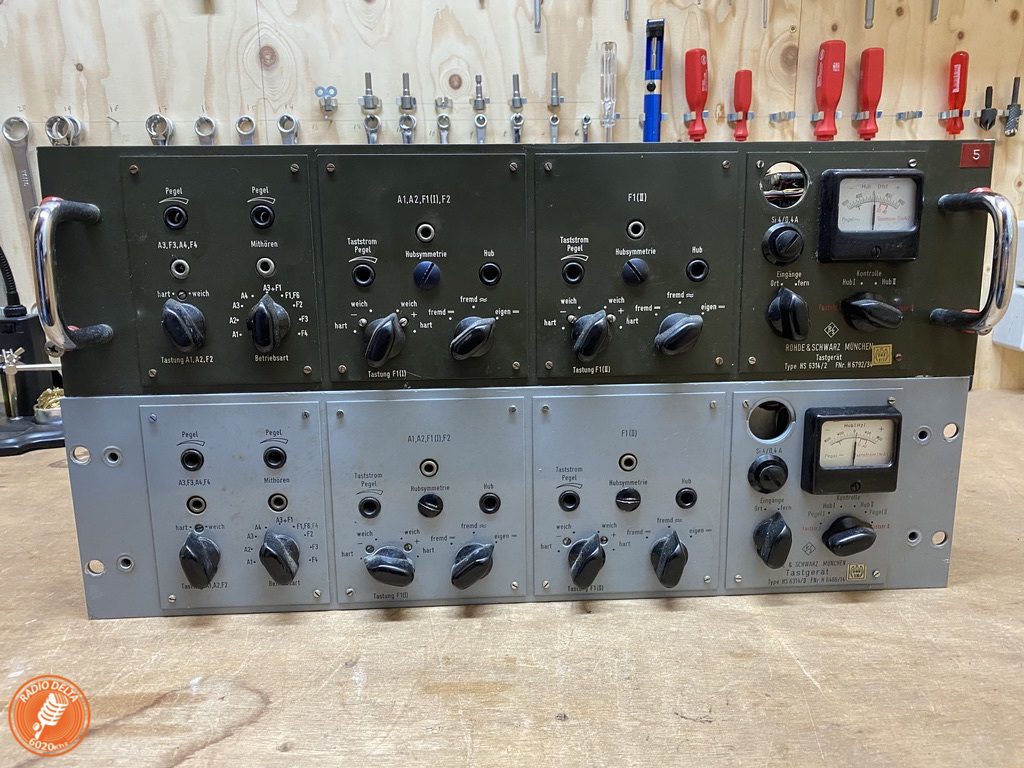
Open cabinet. Restoring this type of transmitter means inspecting both the electrical and mechanical condition.

Tube technology. The glow of vacuum tubes is not only nostalgic; it is part of the high-power AM modulation chain.
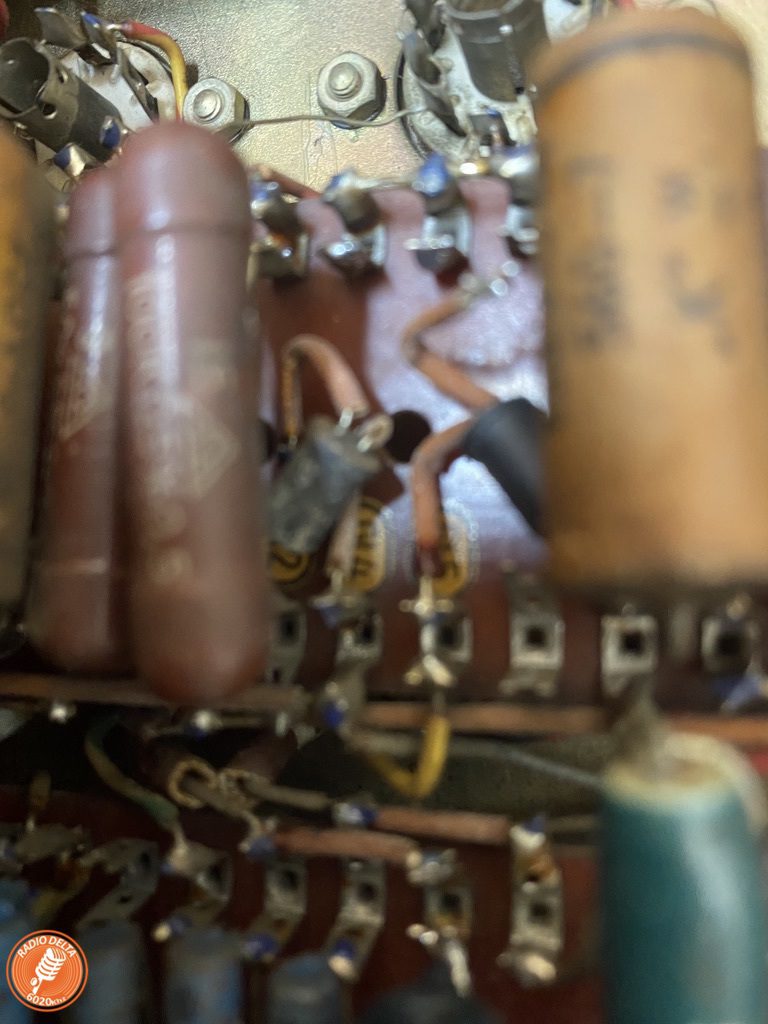
Restoration detail. Every section had to be checked before the transmitter could be trusted on air.
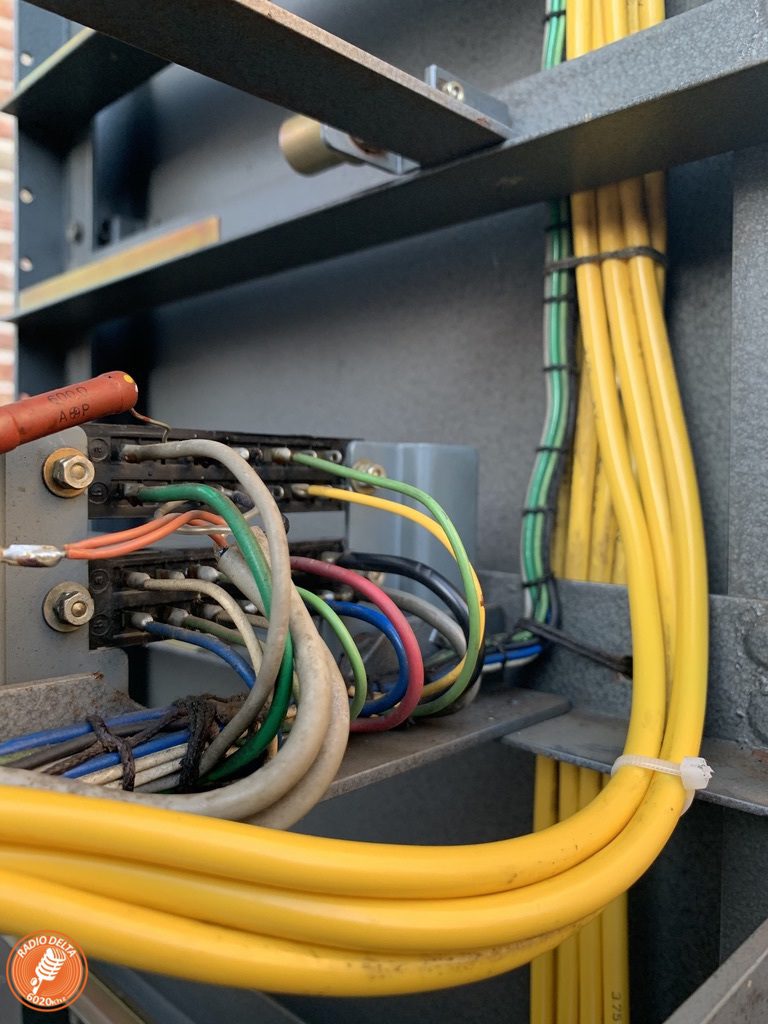
Broadcast engineering. Heavy components, clear layout and serviceability are part of the SK080’s character.
How you can use a transmitter like this
A transmitter like the SK080 is not a casual hobby transmitter. It is high-voltage broadcast equipment and should only be operated by people who understand RF safety, mains power, high voltage, antenna matching and AM modulation. But as a learning platform, it is extremely valuable.
- Start with documentation: understand the RF path, power supply, modulator and protection circuits before applying power.
- Restore in stages: never assume that old capacitors, switches, contacts or tube sockets are safe.
- Use a proper dummy load: test RF output and modulation before connecting an antenna.
- Monitor everything: carrier, modulation peaks, temperature, current and audio level must all be watched.
- Do not overdrive: clean AM usually sounds better than maximum modulation pushed too far.
- Compare on real receivers: a transmitter can measure well and still sound different after propagation.
For Radio Delta AM, the SK080 was valuable because it connected old broadcast engineering to real shortwave practice. It helped us understand not only how to generate an AM signal, but how to make that signal listenable, stable and recognisable over distance.
Videos: restoration, explanation and on-air tests
These videos document parts of the restoration, explanation and test period, including 6020 / 6040 kHz operation and LP-700 monitoring.
SK080 restoration and first checks
Part of the process of bringing the transmitter back into usable technical condition.
Working through the transmitter
More practical work around the transmitter and its broadcast chain.
Technical test and operation
On-air preparation and practical testing of the restored transmitter setup.
Explanation video
A closer look at the transmitter and what makes this type of AM broadcast equipment special.
Test on 6020 kHz
A practical shortwave test showing how the transmitter behaved on the 49 metre band.
LP-700 station monitor test
Monitoring the AM signal with the LP-700 while checking modulation, RF behaviour and on-air quality.
What this transmitter taught us
The SK080 project showed that old broadcast technology is still extremely useful when treated with care and respect. It also showed that great AM audio is not the result of one single device. It is the result of the full chain: transmitter condition, modulation system, audio processing, monitoring, antenna matching and real reception reports.
On 6040 kHz, the combination of the restored SK080, the Orban 9200 and careful monitoring produced a very strong Radio Delta sound. Not only loud, but controlled, stable and recognisable. That is the real lesson: classic radio engineering still works when the whole chain is understood.
Help us test the signal. Send a reception report with frequency, UTC time, SINPO, receiver, antenna and location. Your report helps us compare real-world propagation and improve future broadcasts.
Send a reception report


